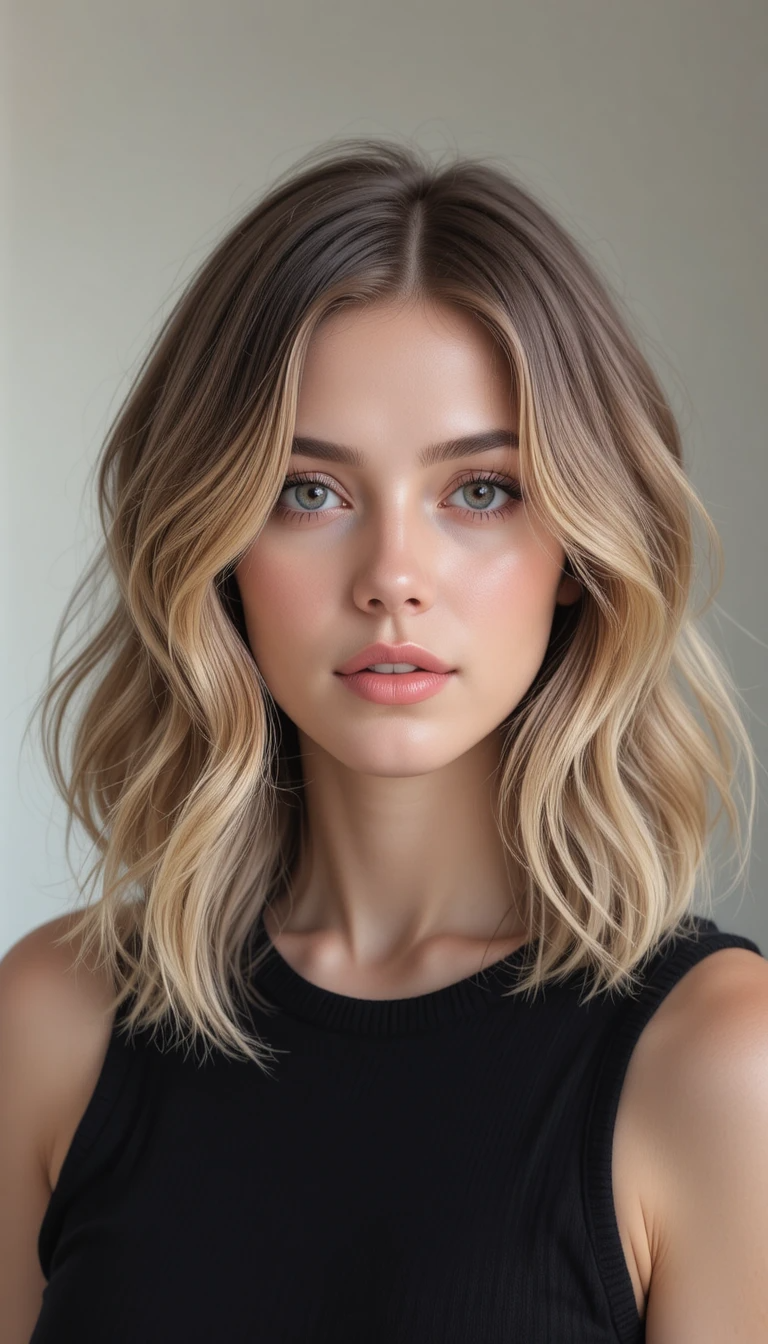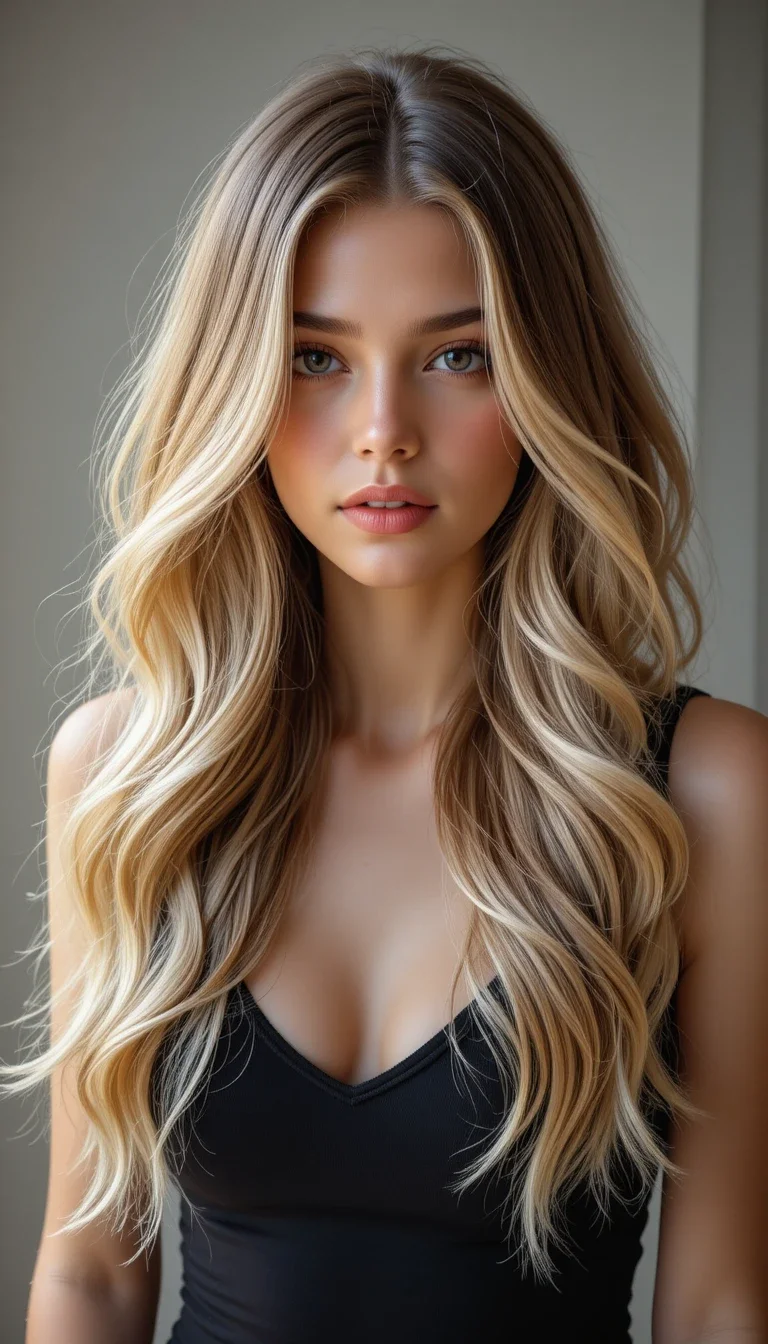

14 Hairstyles for Long Hair, Organized by Your Actual Hair Pattern
Most “hairstyles for long hair” lists show you the same 20 photos regardless of whether your hair is pin-straight or tightly coiled which is part of why so many people leave the salon disappointed.
A cut that looks effortless on straight hair can look completely different, or just not work at all, on curly or coily hair.
This list is organized by hair pattern instead of just by cut name, using the standard hair-typing system (Type 1 straight, Type 2 wavy, Type 3 curly, Type 4 coily) that stylists actually use to talk about texture. Find your pattern below and skip straight to the styles built for it.
Quick Guide: Find Your Hair Pattern
- Type 1 (Straight): Hair lies flat with no natural bend
- Type 2 (Wavy): Forms a loose S-shape, ranges from barely-there bends to defined waves
- Type 3 (Curly): Forms distinct spiral curls, from loose loops to tight ringlets
- Type 4 (Coily): Tightly coiled or zigzag pattern, shrinks significantly when dry.
If you’re unsure which type you are, wash your hair and let it air dry without touching it the shape it dries into is your truest texture.
Hairstyles for Straight Hair (Type 1)
Straight hair is the easiest texture to style smooth but the hardest to keep from looking flat. These cuts add the volume straight hair doesn’t create on its own.
Long Layers with Face-Framing Pieces
Layers throughout the length, with slightly shorter pieces around the face, give straight hair movement it wouldn’t otherwise have. This is the single most requested cut for straight long hair.
- Best for: Any face shape, especially effective on fine to medium-density straight hair
- Maintenance: Low trims every 10-12 weeks since straight hair shows layering growth gradually
- Say this to your stylist: “Long layers with face-framing pieces, nothing too short at the crown”

Butterfly Cut
Short, voluminous layers at the crown blend into long length below. Specifically for straight hair, this cut creates the root lift that straight hair almost always needs.
- Best for: Fine or flat-at-the-root straight hair
- Maintenance: Moderate crown layers need reshaping every 8-10 weeks
- Say this to your stylist: “Butterfly cut, concentrate the short layers at the crown for lift”

Blunt Cut with Curtain Bangs
A clean, one-length cut paired with curtain bangs balances straight hair’s natural sleekness with a softer framing around the face.
- Best for: Thick straight hair that holds a blunt line well
- Maintenance: Moderate bangs need trims every 4-6 weeks, the blunt length every 8 weeks
- Say this to your stylist: “Blunt ends, one length, with curtain bangs blended at the front”
Hairstyles for Wavy Hair (Type 2)
Wavy hair sits between straight and curly, and the goal of most wavy cuts is to enhance the wave pattern without weighing it down into limpness.

Long Shag
Choppy, textured layers throughout the length let wavy hair’s natural bend show through clearly instead of getting smoothed out by length and weight.
- Best for: Medium to thick wavy hair (2B-2C)
- Maintenance: Higher upkeep needs reshaping every 6-8 weeks to keep texture defined
- Say this to your stylist: “Long shag, texturize through the mid-lengths to bring out the wave”

Lob with Soft Layers
A long bob with soft internal layering gives wavy hair a fresher, lighter shape than keeping it at full length, without losing the wave pattern.
- Best for: Looser waves (2A-2B) that get weighed down at very long lengths
- Maintenance: Low trims every 10-12 weeks
- Say this to your stylist: “Long bob with soft internal layers, not heavy face-framing layers”

V-Cut
A pointed V shape at the back works especially well on wavy hair because the natural bend softens what would otherwise be a sharp, graphic line on straight hair.
- Best for: Medium-density wavy hair
- Maintenance: Moderate the point needs occasional trims but ages gracefully
- Say this to your stylist: “V-cut at the back, let the wave soften the point naturally”
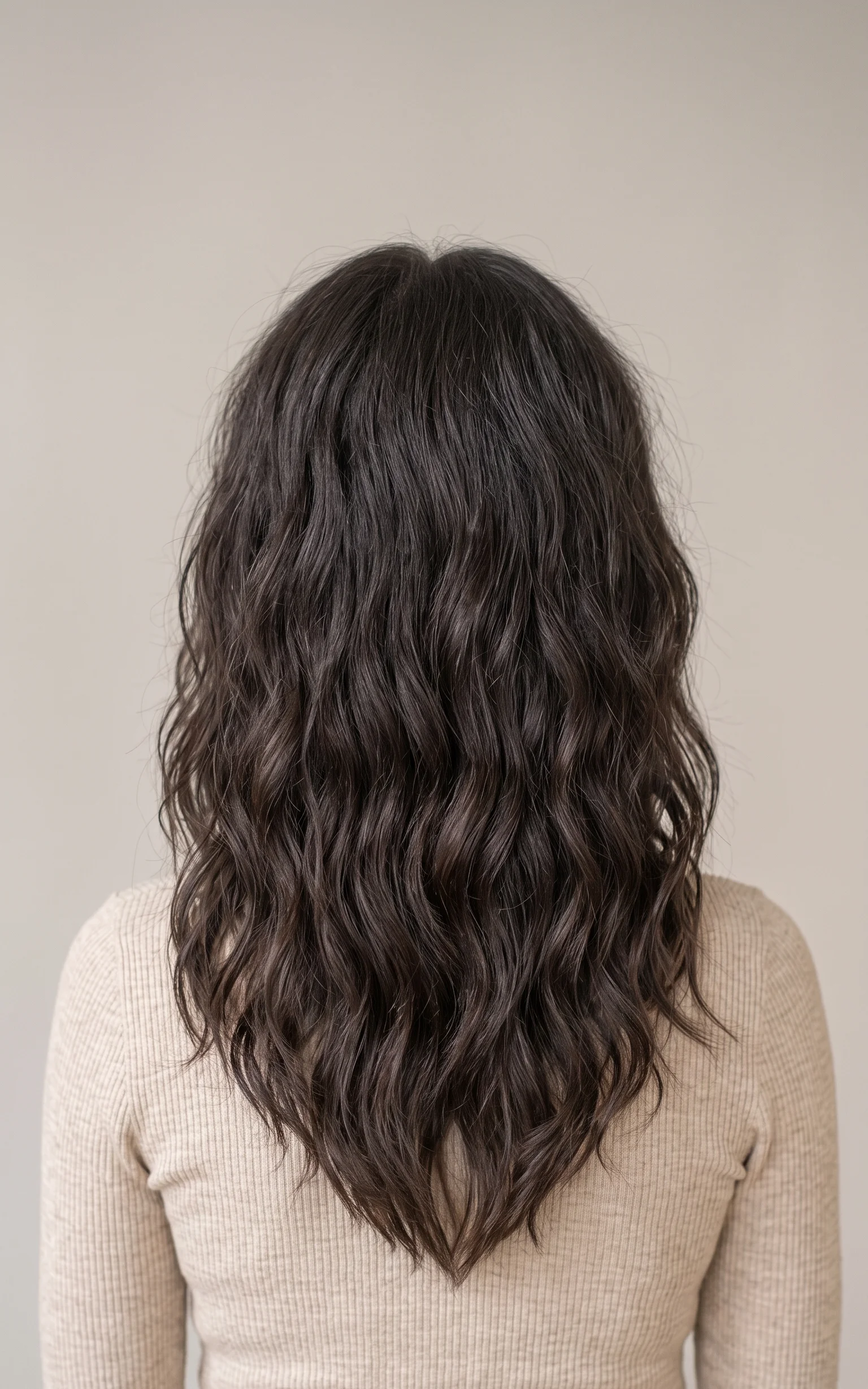
Wolf Cut for Wavy Hair
Shorter, voluminous crown layers with length retained at the back give wavy hair a textured, lived-in shape that doesn’t fight the natural pattern.
- Best for: Thick wavy hair that needs volume relief at the crown
- Maintenance: Moderate grows out well since the style is meant to look textured
- Say this to your stylist: “Wolf cut, work with the wave pattern, don’t over-thin the layers”
Hairstyles for Curly Hair (Type 3)
Curly hair needs cuts that account for shrinkage curls sit shorter when dry than they measure when wet, which is the single most common mistake in curly haircuts.
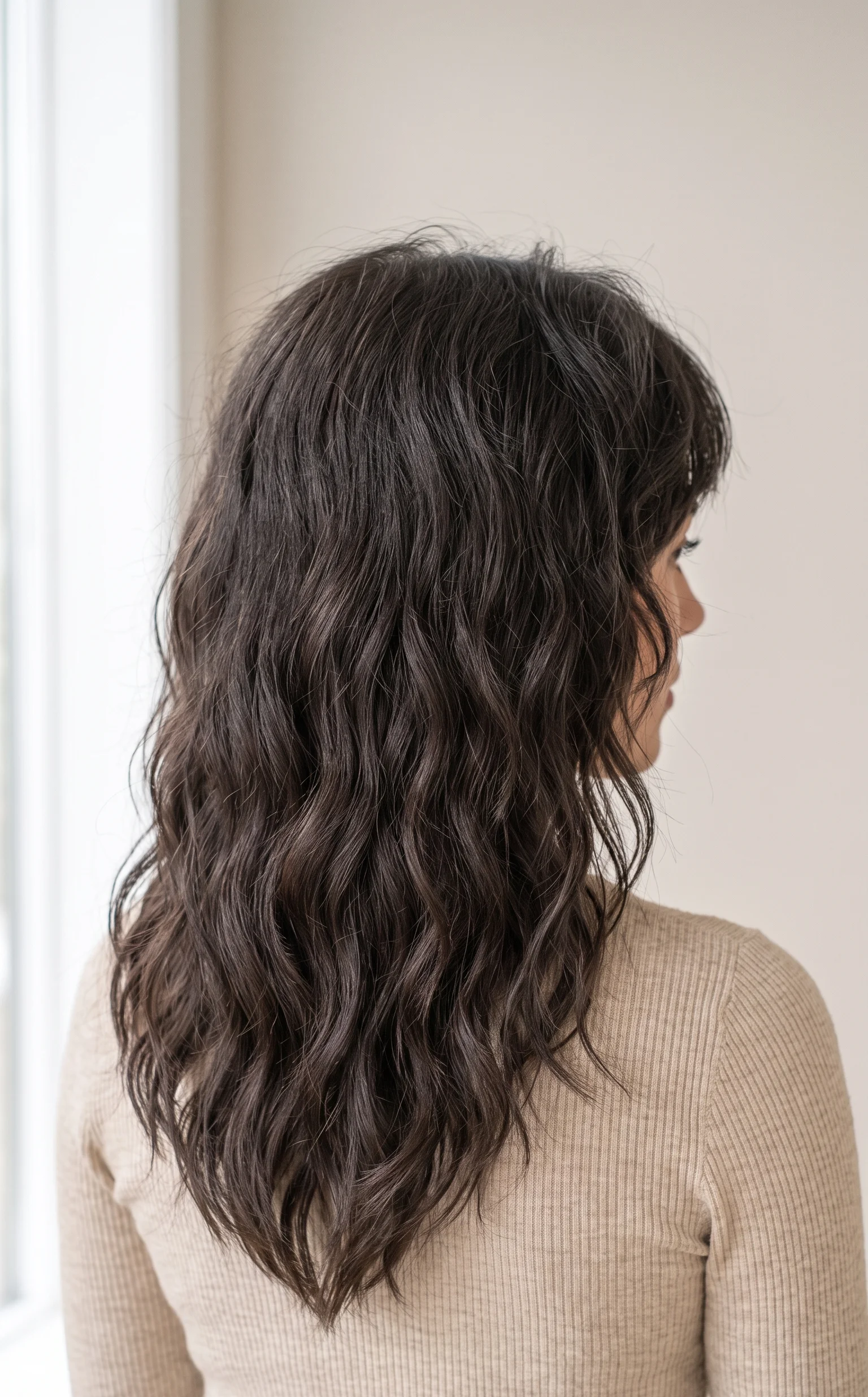
Curly Long Layers
Long layers cut specifically for curl pattern (ideally cut dry, not wet) define each curl individually instead of letting the weight pull curls into one heavy mass.
- Best for: Defined curls (3A-3B) at any density
- Maintenance: Low to moderate trims every 10-12 weeks; cutting curly hair dry on a defined curl avoids losing definition that happens when wet hair stretches and then shrinks back.
- Say this to your stylist: “Curly layers, please cut dry so you can see the actual curl pattern”
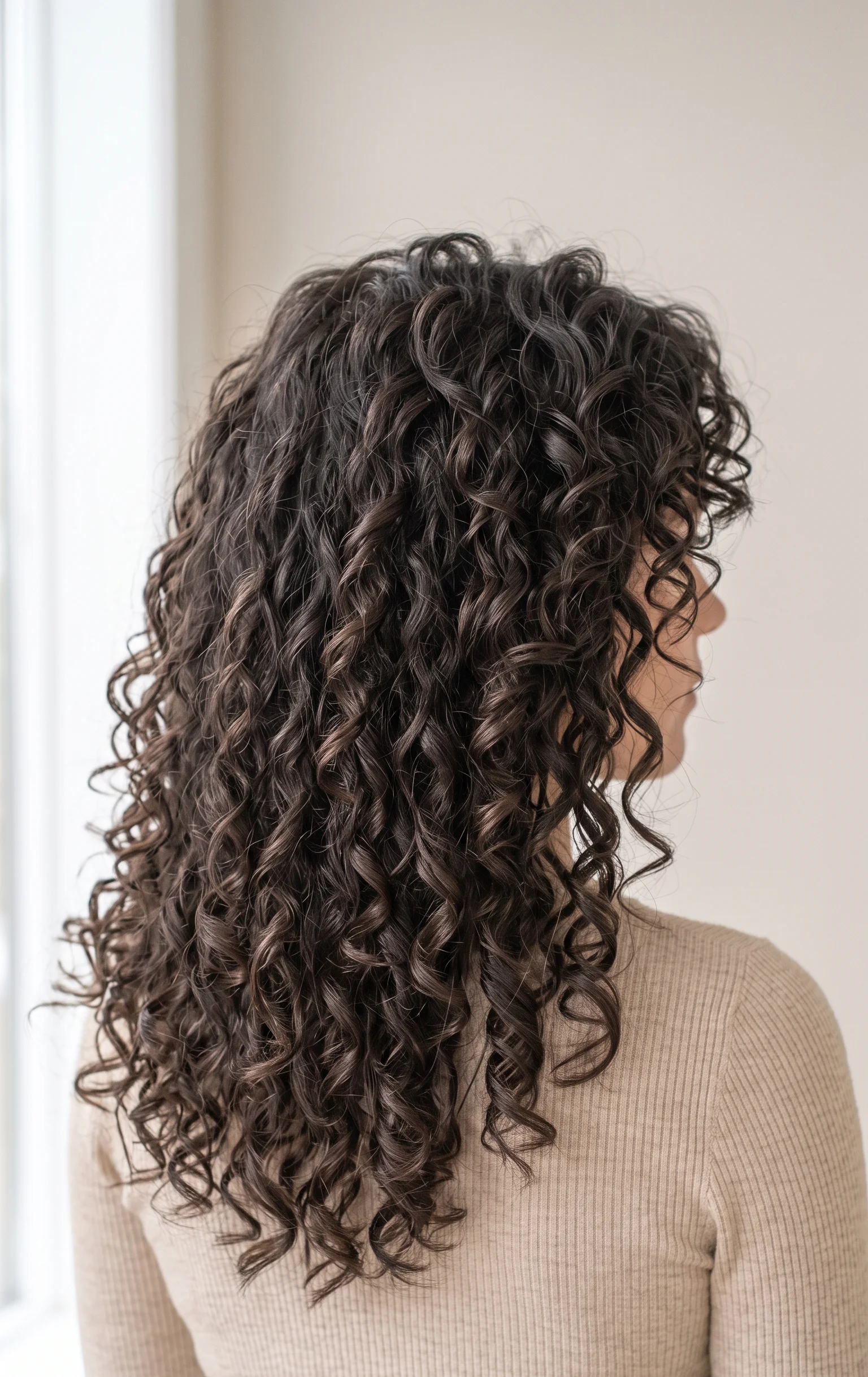
Curly Shag
Heavier texturizing throughout breaks up bulk in curly hair and helps prevent the triangle-shaped silhouette that can happen with longer curly cuts left untouched.
- Best for: Thick, voluminous curls (3B-3C)
- Maintenance: Higher needs reshaping every 8 weeks to maintain the texturized look
- Say this to your stylist: “Curly shag, texturize to avoid a triangle shape at the bottom”
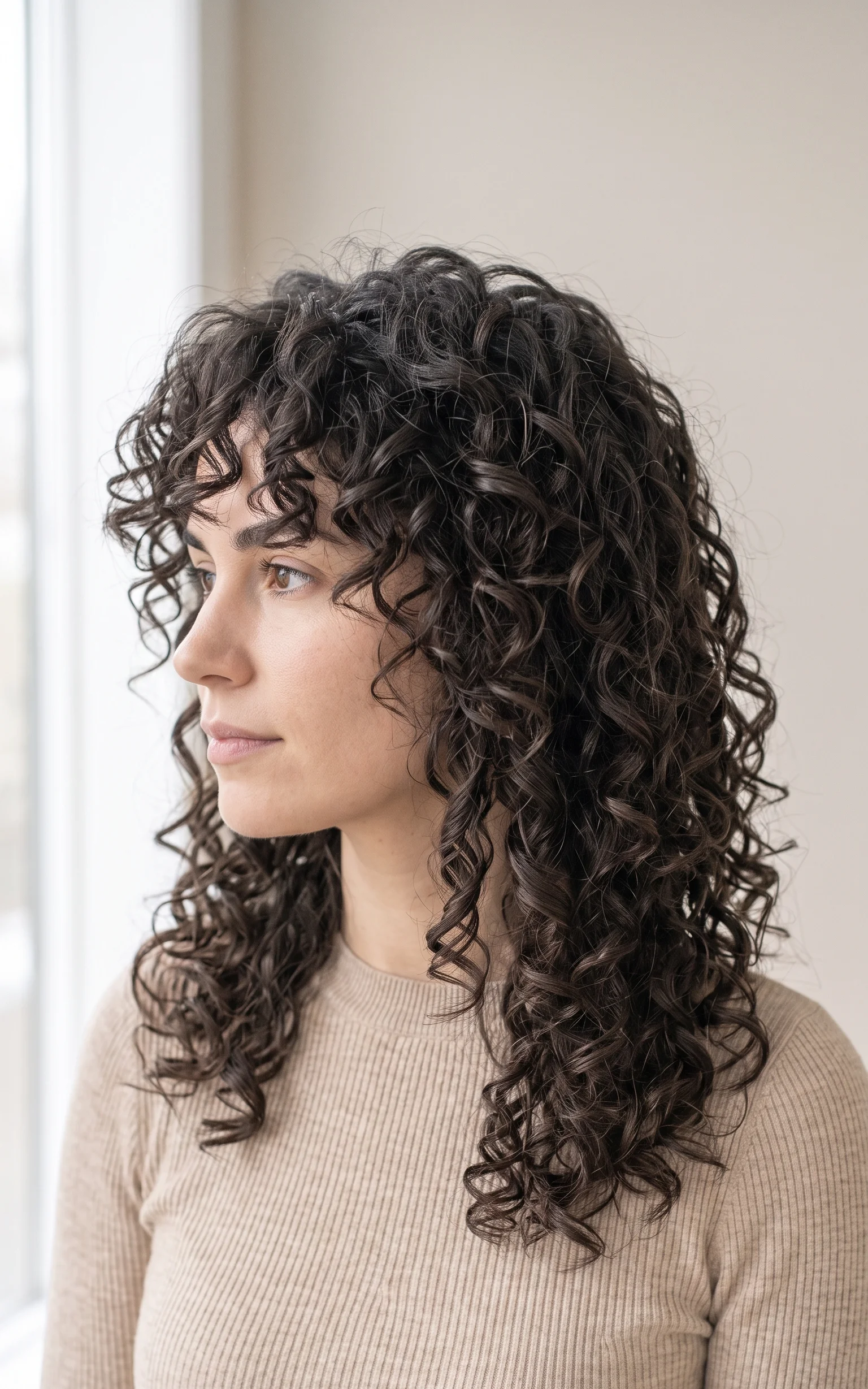
Curly High Half-Up Style
Gathering the top section high on the crown while leaving curls down elsewhere is a styling technique, not a cut, but it’s one of the most effective ways to manage length and show off curl definition at once.
- Best for: Any curl pattern, especially useful for keeping curls off the face during humid weather
- Maintenance: None structurally daily styling choice
- Say this to your stylist: Not applicable this is an at-home styling technique.
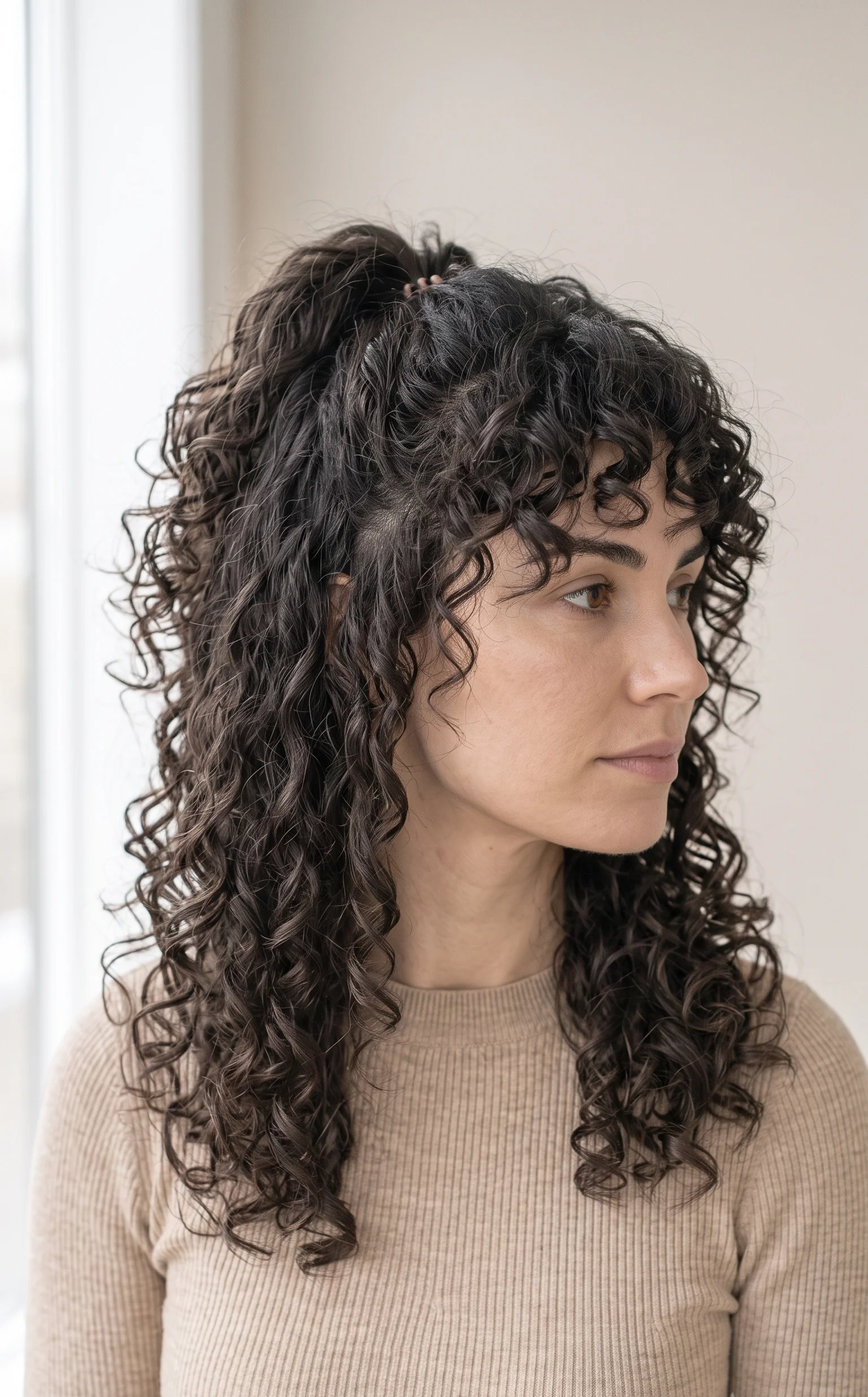
Curly Bixie
A shorter, textured cut that sits between a bob and a pixie bold on curly hair because curls add volume that makes the shorter length read fuller than it would on straight hair.
- Best for: Defined curls (3A-3C) wanting a length change
- Maintenance: High needs trims every 5-6 weeks to maintain shape as curls grow
- Say this to your stylist: “Curly bixie, cut dry, keep enough length for the curl to still hang”
Hairstyles for Coily Hair (Type 4)
Coily hair has the most natural shrinkage of any pattern and benefits most from internal layering for shape, plus protective styling options that minimize daily manipulation.
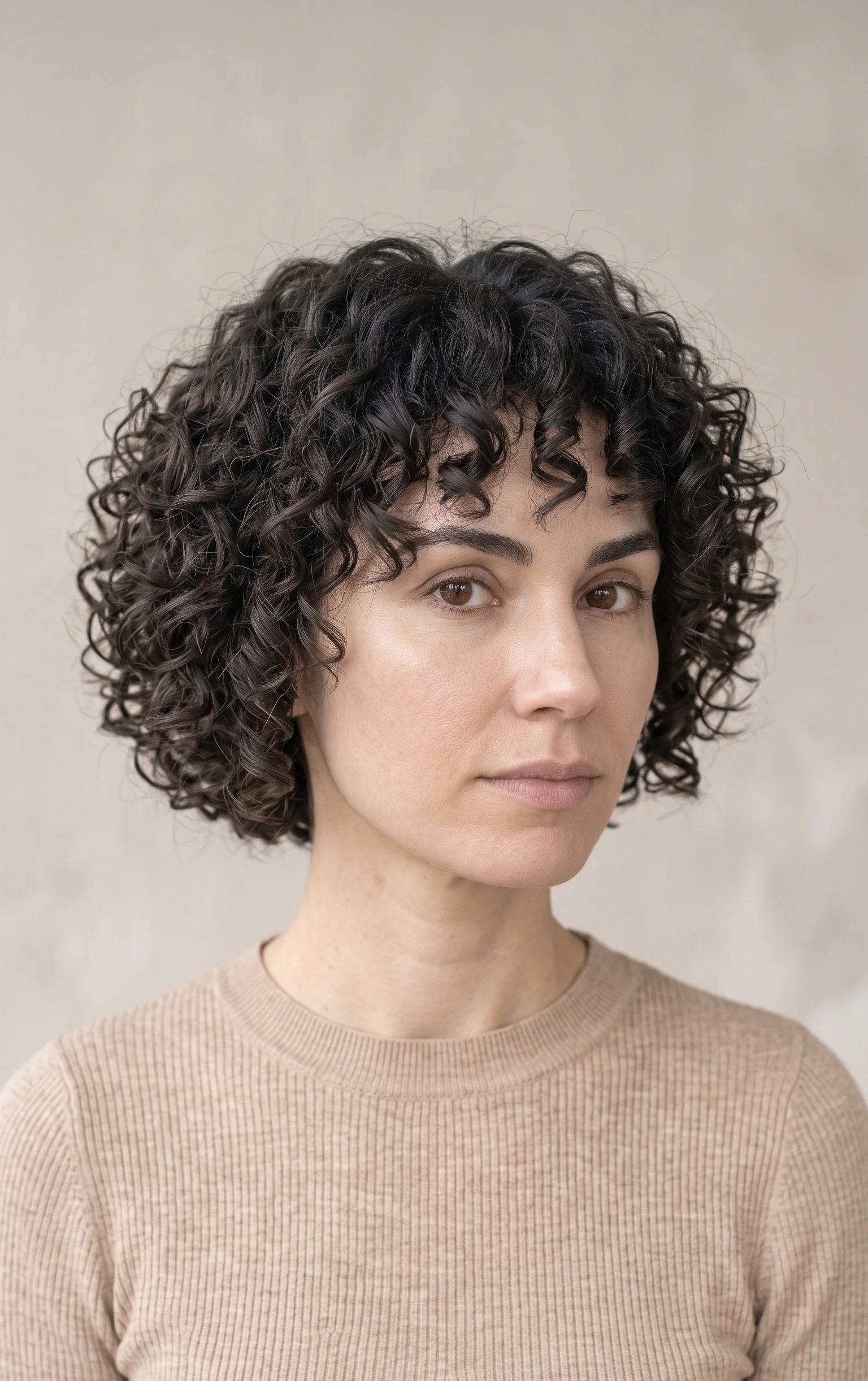
Layered Twist-Out
Internal layers cut into coily hair before a twist-out styling routine give the finished result more shape and movement than a one-length cut would. Internal layers help give coily hair more shape, and styles like twists are well suited to this hair type.
- Best for: Type 4A-4B coily hair
- Maintenance: Moderate trims every 8-12 weeks to maintain layer shape as hair grows and shrinks
- Say this to your stylist: “Internal layers throughout, cut dry to account for shrinkage”
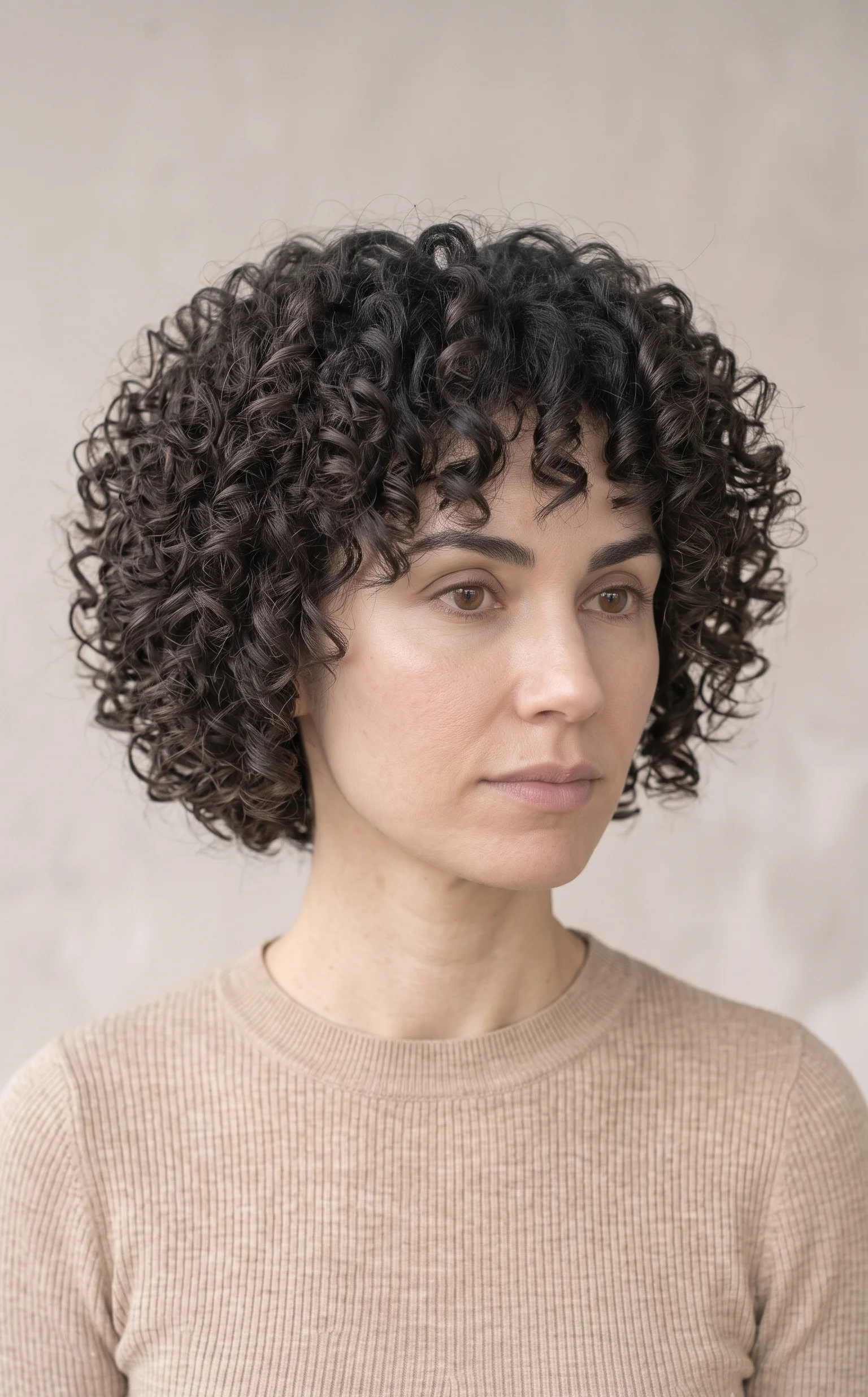
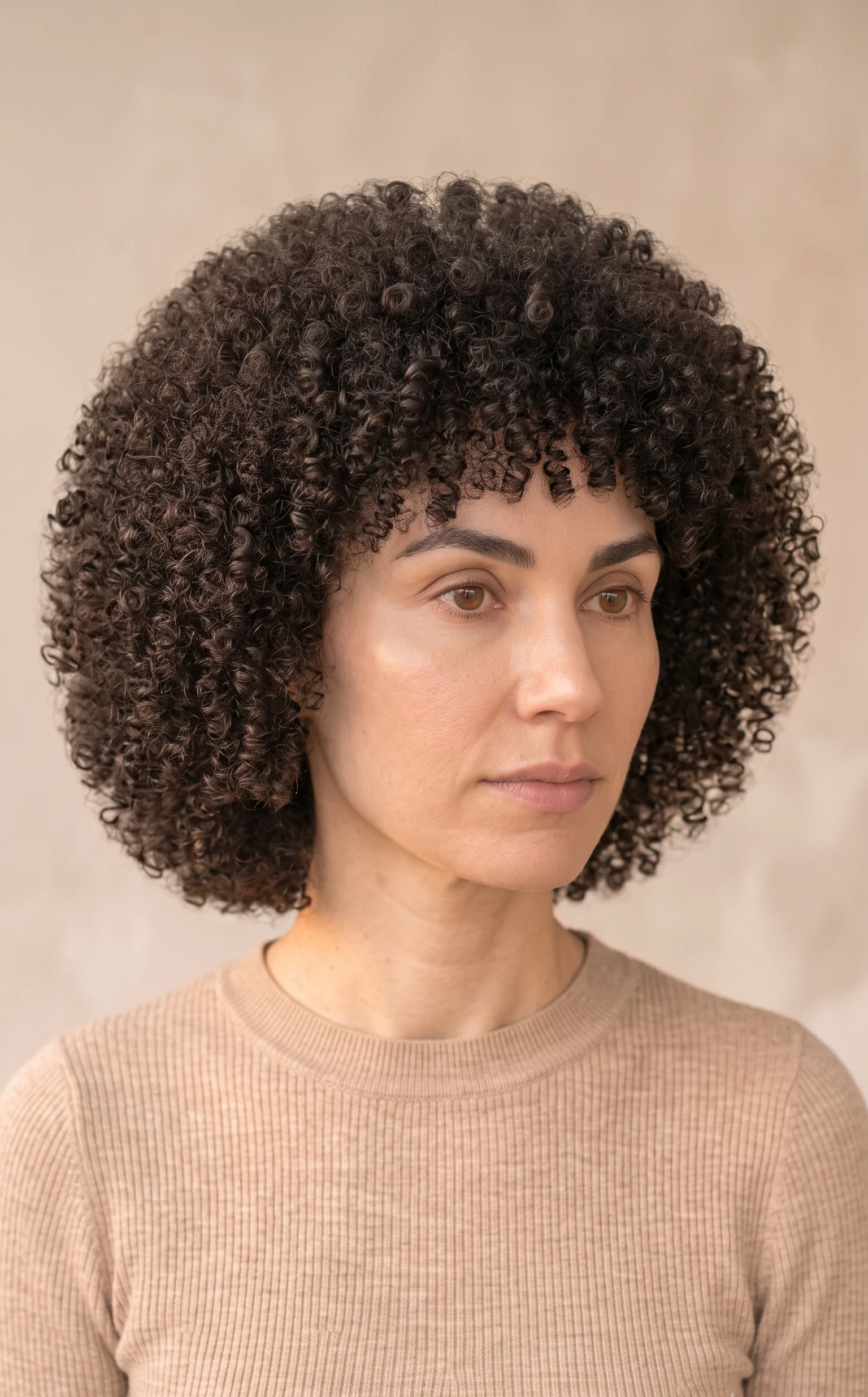
Defined Long Afro
A well-shaped, longer afro that uses the natural coil pattern for volume and shape rather than fighting it with heat or chemical straightening.
- Best for: Type 4A-4C coily hair at any density
- Maintenance: Low day-to-day, but needs regular moisture care to maintain definition and prevent breakage
- Say this to your stylist: “Shape the afro at the perimeter only, don’t thin the internal volume”
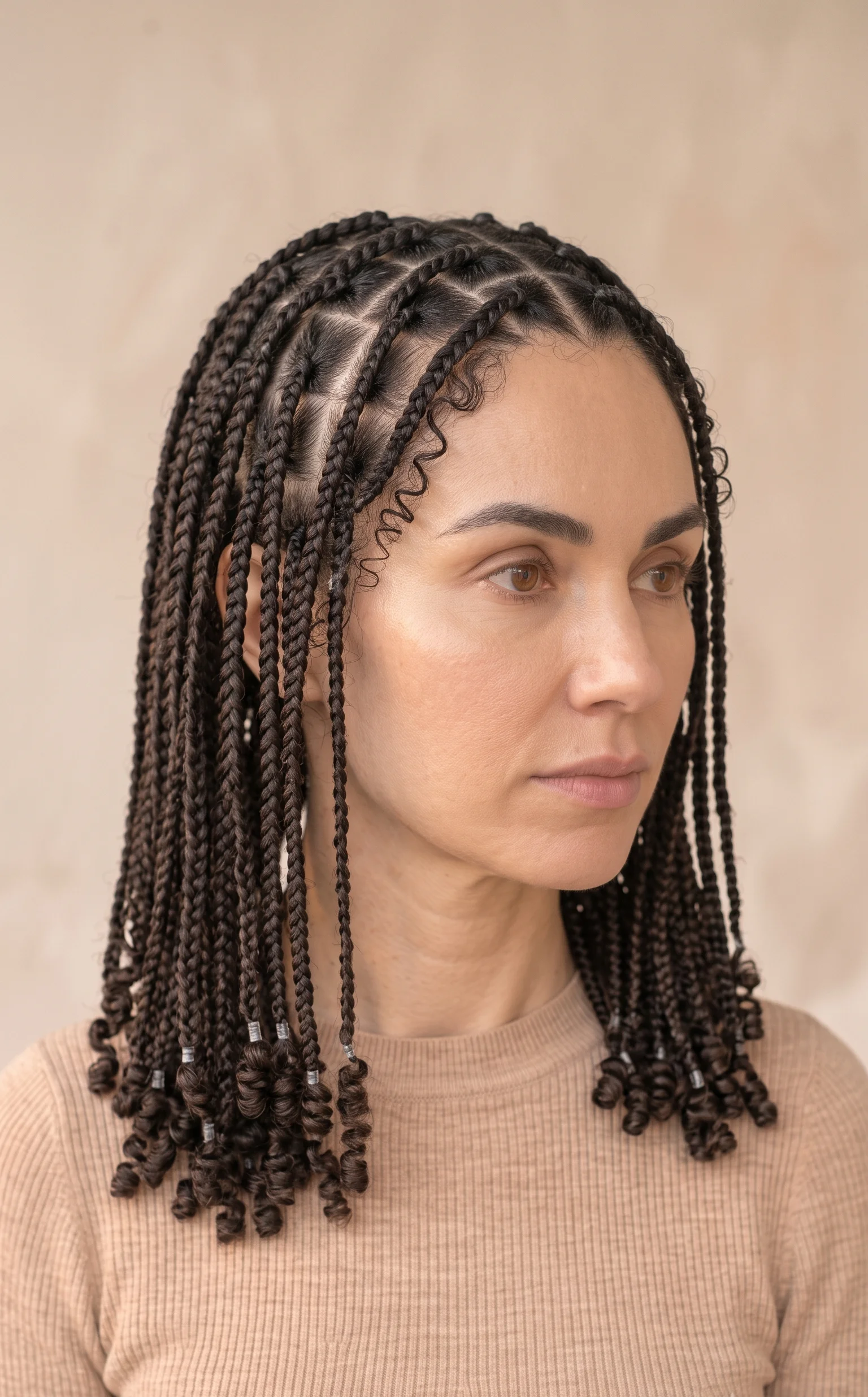
Protective Braided Style
Braids or twists keep coily hair’s ends protected from daily manipulation and breakage, which matters more for Type 4 hair than any other texture since it’s the most prone to dryness and breakage.
- Best for: Any density of coily hair, especially during colder or drier months
- Maintenance: Low day-to-day once installed, but the style itself typically needs replacing every 4-8 weeks depending on the braid type
- Say this to your stylist: This is typically done by a braider rather than a traditional stylist confirm braid size and parting pattern before starting.
Frequently Asked Questions
How do I know what hair pattern I actually have?
Wash your hair, apply no products, and let it air dry without touching it. The shape it dries into flat, S-shaped waves, spiral curls, or tight coils is your natural pattern.
Can one haircut work for multiple hair patterns?
Some, like long layers, adapt reasonably well across straight and wavy hair. But curly and coily hair generally need cuts done specifically for that texture, ideally cut dry, since wet cutting doesn’t account for shrinkage.
Is it true curly hair should be cut dry, not wet?
For defined curls and coily hair, yes cutting on a defined dry curl prevents losing part of the shape that happens when wet hair stretches out and then shrinks back after drying. Straight and wavy hair can be cut wet or dry with similar results.
Why does my curly hair look different right after a haircut versus a few days later? Curl pattern can take a few days to settle back into its natural shape after being stretched, washed, or product-styled in the salon. This is normal and not a sign of a bad cut.
Do all hair patterns need the same trim frequency?
No. Straight and wavy hair with low-maintenance cuts can often stretch to 10-12 weeks between trims. Curly, coily, and any heavily layered or texturized cut typically needs more frequent reshaping, every 6-10 weeks depending on the style.